27th March 2026
Pioneer of ‘third-way’ education reforms and past chair of the campaign for freedom of information dies aged 78
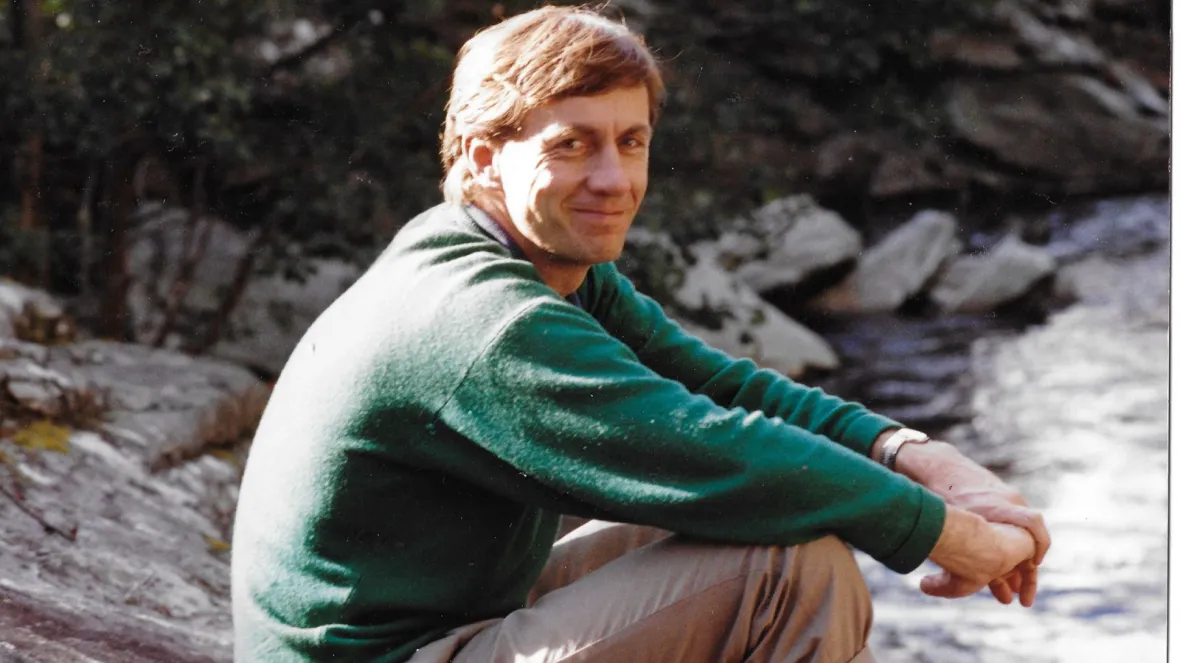
Neil McIntosh, a founding member and past chair of the Campaign for Freedom of Information, died in January 2026. This obituary appeared in The Times on February 24 2026 and is reproduced here with the kind permission of The Times.
As a young Labour councillor for the London borough of Camden in 1974, Neil McIntosh received a proposal from council house tenants effectively to run their estates. He was keen to implement the plan until trade unions representing council staff threatened strike action.
“It was a very shocking moment,’’ McIntosh told the Times Educational Supplement in 1998. “Until then, I had believed that the state should provide everything. But I saw that the producer interest could squeeze out the interests of consumers — in this case rather poor consumers. It got me thinking that maybe there were other ways of doing things.”
Some 20 years later a revolution was starting aimed at driving up standards in schools — begun by John Major’s Conservative government, taken up by Tony Blair’s New Labour and measured by key performance indicators.
Cynicism abounded at the attempt to make the people running schools more accountable. Resistance from local education authorities and in academia was fierce, amid an inability to acknowledge historical incompetence and poor governance. Wresting schools from state control was therefore a huge challenge, but there was no one more effective at doing so than McIntosh.
As a former director of the homelessness charity Shelter in the Seventies, McIntosh had witnessed arm’s-length housing associations replacing local authorities as providers of social housing and he himself served as a director of Stonham Housing Association from 1982 to 1988.
He had a vision for a similar model to transform the nation’s underperforming schools when in 1990 he moved from running Voluntary Service Overseas (VSO) to take over a small and relatively unknown charity called the Centre for British Teachers (CfBT), which placed English teachers abroad.
Applying project management skills from the commercial sector to deliver public services more efficiently, McIntosh transformed CfBT (now the Education Development Trust) into one of the biggest charitable enterprises in the UK, scooping up contracts to deliver British-funded education projects in the global south, facilitating school inspections for the newly formed Ofsted from 1992; playing a leading role in New Labour’s national literacy strategy and national numeracy strategy from 1997; and taking on the management of failing schools.
By 2012, when he retired, CfBT had a turnover well in excess of £100 million a year and employed more than 2,000 people. It was ranked in the top 30 out of 3,000 charities in the UK in terms of revenue.
“He was very compelling and persuasive, extremely charming and charismatic. He would rigorously challenge people using the facts in a well-informed way,” said his wife, Melinda Letts. A proud and likeable Scot with an impish grin, McIntosh cared for his staff but could be demanding. Interviewing one candidate for a job, he said: “You went to St John’s College, Oxford, at the same time as Tony Blair. So what went wrong?”
Neil Scott Wishart McIntosh was born one of two children in Kirkcaldy on the east coast of Scotland in 1947 to Bill McIntosh and Rena (née Scott). His father ran the renowned McIntosh furniture business in the Fife town, which had been in the family since the 19th century. His mother ran an electrical business.
After attending the independent Merchiston Castle School in Edinburgh, Neil studied politics at York University and an MSc in industrial relations at the London School of Economics. He went on to work as a research associate at the policy institute Political and Economic Planning and from 1973 was research director at Southwark Community Development Project.
At the same time he served as a councillor in Camden and chaired its housing committee. The London borough had a fine vintage of future Labour heavyweights, including its leader Frank Dobson, as well as Ken Livingstone and Tessa Jowell. McIntosh seriously considered becoming an MP himself, but with two young children to look after, he turned down a winnable seat.
In 1976, aged 29, he was appointed to lead Shelter, joining after a period of instability with three directors in four years. McIntosh would go on to play a leading role in the enactment of the Homeless Persons Act 1977, which created a statutory duty for local authorities to help the homeless, and was in pole position to provide the services that councils needed to procure. In 1979 he started an initiative to house vulnerable young people leaving the care system and a home improvement service for the elderly. “During his tenure he consolidated Shelter’s position as the foremost national homeless campaigning organisation,” said his fellow homelessness campaigner Jon Fitzmaurice.
He left Shelter in 1985 to become director of VSO, bringing commercial discipline and improving the training of volunteers during a period of growth.
Eyebrows were raised in 1990 when he became chief executive of CfBT, a small charity with 12 staff and 300 registered teachers, but he had a plan. “He was aware that the new government of John Major was minded to open up the management of UK-funded projects to new suppliers through competitive procurement,” said Tony McAleavy, chief education and skills officer at the EDT (formerly CfBT). “CfBT provided Neil with an organisation that could bid to provide professional, cost-effective management of UK-funded education reform projects.”
In 1992 the UK government invited outside bodies to bid to run aid-funded education reform projects in developing countries that had hitherto been the preserve of the British Council. CfBT tried for and won the first two contracts open to competition: one to strengthen primary education in Kenya and the other to improve English teaching in government schools in Cambodia.
By 2000 CfBT had delivered education improvement projects in Vietnam, Mozambique, Uganda, Botswana, Namibia, Guyana and Mongolia, obtaining funding from the EU, the Asian Development Bank, the World Bank and Unicef.
By then McIntosh had parked CfBT’s tanks firmly in the sights of the ideologically fortified British education system. His interest in domestic education began after Ofsted replaced HM Inspectorate of Schools in 1992. The new body was desperately short of inspectors to carry out the service at the pace that the government demanded; CfBT won some of the first contracts to perform inspections for Ofsted.
When the New Labour government launched the £200 million national literacy strategy in response to reports that many children were going to secondary school unable to read and write properly, McIntosh made a proposal to Andrew Adonis, the government’s education policy adviser, to manage the National Numeracy and Literacy Centre for the Department for Education.
By now a Liberal Democrat, McIntosh worked with David Blunkett, the education secretary, to develop the model, including the Literacy Hour that supported teachers in many of Britain’s 17,000 state primary schools. The programme would be extended to secondary schools, and the National Numeracy Strategy was added.
In the late 1990s CfBT started to manage schools, such as Rams Episcopal School in Hackney, which had been under special measures for two years, and linked up with Lambeth council in south London to help run its “education action zone”. Choice, McIntosh said, was the key point. “People sometimes say local authorities like Lambeth and Hackney have abrogated their responsibilities by calling us in,” he told the TES in 1998. “But as I see it, the ultimate abrogation of responsibilities is to put someone into a school who you know is not up to it. That is what has happened in the past when local authorities had a complete stranglehold.”
McIntosh further expanded CfBT’s scope into careers guidance, teacher training and ICT. Profits were reinvested into research to make the wider case for market reform of education delivery and more autonomy for schools that could prove they were successful. As such, he was a passionate advocate of academies that would be beyond local authority control and their “restrictive practices”.
Critics claimed that CfBT was unaccountable to local taxpayers. McIntosh faced them directly and with great tenacity, armed with as much evidence as possible to prove his case. Frustrated at how difficult it was to obtain public data for research, he had become an early member of the Campaign for Freedom of Information from 1984, which convinced the Blair government to pass the Freedom of Information Act in 2000. McIntosh remained chairman of the campaign until 2014, defending the law from subsequent attempts to water it down or circumnavigate it.
In 1971 McIntosh married Genista Tandy, a future director of the National Theatre and chief executive of the Royal Opera House, who was made a life peer as Baroness McIntosh of Hudnall. They divorced in 1990. He is survived by their two children: Flora is an opera singer who runs the touring opera company and arts charity OperaUpClose; Alex is the director of a sustainability consultancy called Create Sustain.
He married Letts in 1991. They met while working together at VSO, and she now teaches Latin and ancient Greek at Corpus Christi College, Oxford. “He had a remarkable ability to keep his brain unencumbered by detail,” she said. “I once noticed that his in-tray was empty. He said, ‘I’m not meant to have things in my in-tray. I’m the chief executive.’” McIntosh is also survived by their son, Fergus, head of fact checking at the New Yorker magazine, and Isobel, a climate campaigner and policy manager for Global Justice Now.
McIntosh loved golf, sailing and walking. He called his diagnosis of Parkinson’s disease a “thundering nuisance” but refused to let it stop him. In retirement from 2012 McIntosh was president of the CfBT Schools Trust and a director of the Access Project to provide mentoring and skills coaching for disadvantaged young people to get into good universities, an honorary fellow of the department of education at Oxford University and the governor of four schools.
Latterly he was also stricken with dementia, but one compensation, said his wife, was that he proposed marriage to her twice in the last year of his life.
Neil McIntosh CBE, director of third-sector organisations, was born on July 24, 1947. He died of Parkinson’s disease on January 5, 2026, aged 78.